Digital Identification for Industrial Sensors: When RFID Tags Paves the Way for the Digital Twin Era
24
10
Imagine a cement plant where dust covers everything, or a mining site that is constantly exposed to harsh weather conditions. In such environments, industrial sensors, no matter how durable, are not immune to damage: scratches, dents and especially the nameplate containing technical information are blurred, peeled or unreadable.
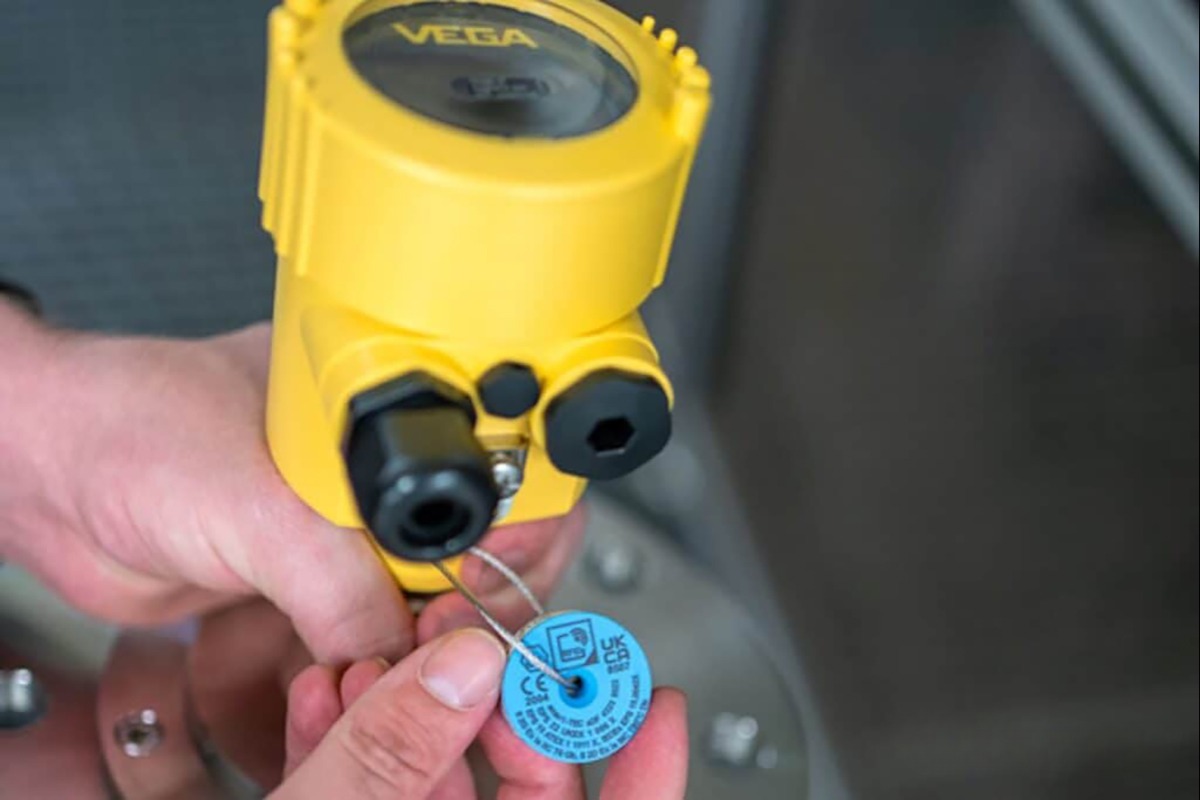
This seemingly small problem can have big consequences: incorrect maintenance of equipment, incorrect calibration of parameters or hours spent just to identify a sensor. Realizing this inherent problem, VEGA, one of the world's leading manufacturers, has come up with a strategic solution: integrating RFID (radio frequency identification) tags into its PRO series of sensors, starting with the VEGAPULS 6X level radar sensor.
Durable Identity Solutions: Overcoming Physical Limits
The core idea is simple but powerful: even if the physical nameplate is completely destroyed, the sensor's "digital identity" remains safe inside the RFID chip. The chip can withstand extreme temperatures, UV rays, dust and humidity, allowing for reliable contactless readings after years of operation.
"They are an ideal complement to embossed or barcoded tags, especially for outdoor installations," says Stefan Kaspar, Product Manager at VEGA. "With RFID tags, our sensors can be reliably tracked even after years of use in the harshest conditions."
A chief engineer specializing in plant maintenance shared: "Not being able to accurately identify equipment is a nightmare. It not only wastes time but also poses a safety risk. VEGA's RFID solution addresses the root of the problem. It transforms identification from something vulnerable (physical labels) to something almost immutable (digital signals), increasing the speed and accuracy of maintenance work."
More than a chip: A step towards industry-wide standardization
VEGA’s move is more than just a single product upgrade. It reflects a larger industry-wide shift toward standardizing device identifiers. This new approach is fully aligned with the international standard IEC 61406, a set of rules that defines unique identifiers for physical objects and how they connect to digital information.
VEGA is also a member of the Digital Data Chain Consortium, an alliance of plant operators, service providers, and equipment manufacturers. “We are working with multiple companies to develop a common standard for data exchange,” Kaspar explains. “In the future, it will be easier to access and exchange information between all stakeholders throughout the lifecycle of a device.”
This means that, by simply scanning a QR code or reading an RFID tag, users can instantly access all of the asset's documentation, no matter where they are.
The Door to Digital Twin
The long-term vision for this technology is even more ambitious: integrating sensor identifiers into the “digital twin” environment. A digital twin is essentially a comprehensive digital record of a physical device, containing all information throughout its lifecycle.
“Imagine, wherever you are in the factory, in the future you will be able to access the unique identity of the sensor with just one click,” Kaspar describes. “And from there, go straight to the digital twin, which contains all the important information – from documentation, set parameters, tests performed, to repair and recycling information.”
RFID tags are the physical bridge, the “key” to unlock that digital world, making asset management more intuitive and intelligent than ever.
Additionally, RFID tags can be programmed with custom information, such as details about a specific measuring point. For complex projects with hundreds of sensors, this capability significantly simplifies maintenance and reduces the risk of human error. This is not just an upgrade, but a fundamental step towards a future of safe, efficient, and fully connected industrial operations.