24
10With only about three months left before the new tax declaration method under Decree 70/2025 takes effect, the actual implementation at many retail shops—especially grocery and fashion stores—remains sluggish. While many restaurants and cafés have proactively equipped POS machines, a large number of small vendors still appear confused and… waiting.
A quick tour around local businesses reveals a stark contrast.
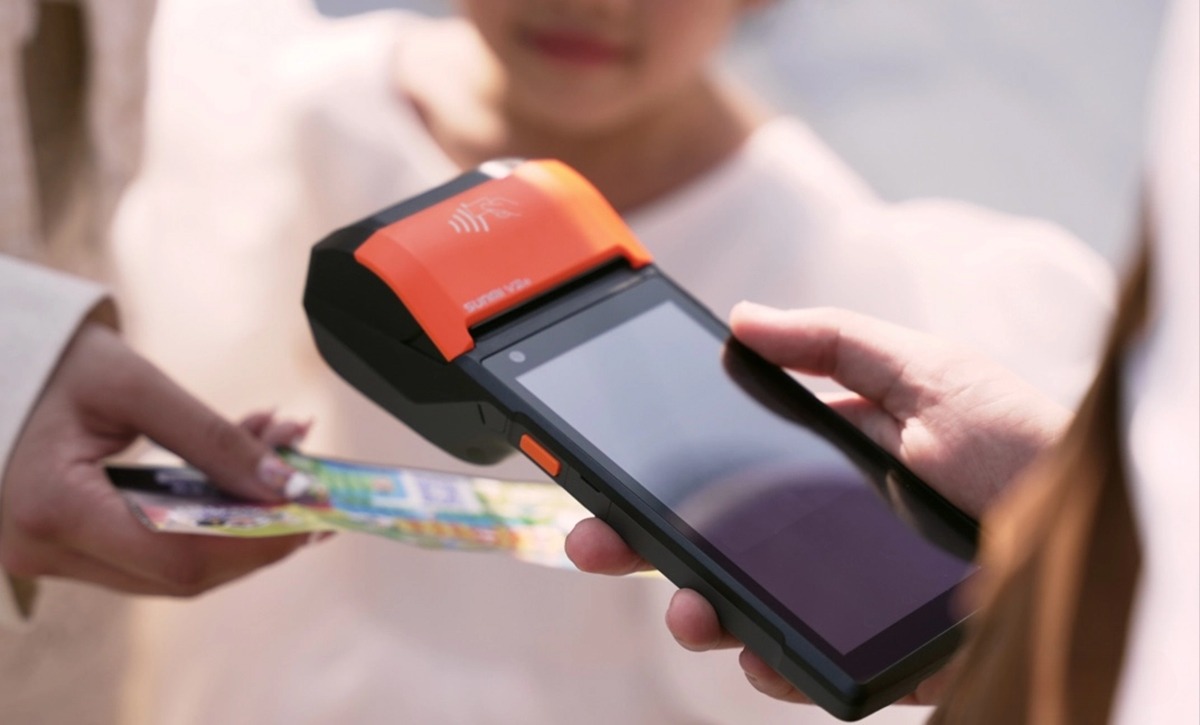
Food and beverage establishments tend to be more agile, adopting mini POS machines or sales management software early.
The owner of a noodle shop on Tan Phuoc Street (Ho Chi Minh City) shared:
“Even though my revenue is far below the 1-billion-VND threshold per year, the regulation is already in place, so I want to comply for long-term business. I invested less than 2 million VND in a handheld POS machine—both to stay transparent and to get used to tax declaration later on.”
This mindset—“if not now, then soon”—has become a driving force for many small business owners. They accept a slight increase in prices to offset costs, viewing it as a necessary investment.
However, having a device doesn’t mean knowing how to use it. Many store owners find themselves puzzled after installation, unsure how to connect their data to the tax authority. Some adopt POS machines because of promotions or fear of penalties but end up waiting indefinitely for proper guidance.
In contrast, a considerable number of merchants still stick to cash-based transactions. At a well-known noodle restaurant recognized by the Michelin Guide, when a customer asked to pay via QR code, the staff replied that the “account was broken” and directed the customer to the nearest ATM.
Experts note that this not only causes inconvenience in a cashless era but also reflects a subtle resistance to revenue transparency—the biggest psychological barrier tax authorities must address.
It’s tempting to assume technology is the main challenge, but in reality, the bigger obstacle lies in inconsistent guidance and complex tax procedures.
A fashion store owner in Ho Chi Minh City described her frustration:
“My factory and my shop are under two different tax offices. When I asked how to pay, each gave me a different answer.”
For instance, retail operations are subject to a 1.5% tax rate, while manufacturing is 4.5%. One tax officer said to pay only 1.5%, another insisted on 4.5%, and yet another suggested combining both.
This inconsistency leaves compliant business owners confused and disoriented. When even regulators lack a unified stance, how can small merchants—long accustomed to the simplicity of presumptive taxation—be expected to adapt smoothly?
A recent survey by MoMo of 203 small businesses also found that the biggest barrier to digital transformation is not technology but old operating habits. Most small vendors still manage orders, inventory, and finances manually, resulting in a lack of data for optimization and growth.
Legally, the roadmap is already well-defined: small businesses must issue e-invoices generated from POS systems and connect their data directly with the tax authorities.
According to Lawyer Tran Xoa, a tax expert:
“Starting from May 1, 2026, the presumptive taxation method will be completely abolished. All business households must manage their revenue, expenses, and perform regular tax declarations.”
However, regulation alone is not enough. For the transition to succeed, there must be practical, hands-on support to address each implementation bottleneck.
The partnership between MoMo and MM Mega Market Vietnam, aiming to support one million small merchants in Ho Chi Minh City in their digitalization journey, is a positive signal. This model goes beyond providing tools—it emphasizes training and guidance, helping small businesses maintain stability while gradually adapting to digital management.
The shift from presumptive taxation to declaration-based taxation is an inevitable step toward a more transparent and equitable economy.
However, to ensure no one is left behind, tax authorities and relevant agencies must develop consistent, detailed, and accessible communication and guidance strategies.
The success of this policy will not only depend on its issuance but on how effectively it is implemented—and how well it gains the understanding and support of those directly affected.

24
10Additionally, RFID tags can be programmed with custom information, such as details about a specific measuring point. For complex projects with hundreds of sensors, this capability significantly simplifies maintenance and reduces the risk of human error. This is not just an upgrade, but a fundamental step towards a future of safe, efficient, and fully connected industrial operations.

24
10Enhanced customer experience: The application of QR Codes and RFID can help increase customer engagement and engagement. For example, QR codes on product packaging allow quick access to detailed information, while RFID tags on products can support contactless payments, providing a convenient shopping experience.

24
10To learn more about the wide range of barcode scanners and RFID technology from RTC Technology Vietnam Joint Stock Company, contact us today or call hotline 0981 264 068.